



Welcome to . . . Read With Us Discussion Day
Our Summer Read With Us book selection is John of John by Douglas Stuart.
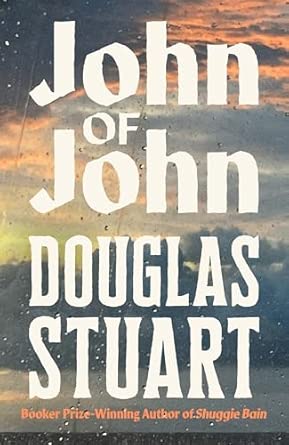 John of John is an extraordinary novel about duty, passion, and the transformative power of the truth. It is full of magnificently drawn characters who are broken and hungry for belonging, bound to each other by their faith and their community and the ties – and secrets – that hold them together. Immersive and compelling, John of John cements Douglas Stuart’s reputation as one of the leading novelists of our day.
And . . . I can’t wait to discuss it with you all!
One of the things that I found particularly fascinating about this novel was its focus on weaving and the descriptions of color. My questions today will follow that (ahem) thread. But before I ask them, I though you might be interested in a very quick “refresher” on Harris Tweed. You might want to take a few minutes to check out this link . . . or, at least, to enjoy some beautiful photography . . . before we talk about the book together.
Here are my questions for today’s discussion:
The Harris Tweed weaving is described in extraordinary detail in the novel. Critics have specifically noted the way the novel’s weaving imagery parallels the complexity of Cal and John’s relationship. Why do you think Stuart devotes so much attention to the process of weaving? And do you think the loom is simply part of the setting, or does weaving become a metaphor for the characters and their relationships?
Color is surprisingly important in the novel. What significance did you see in Cal and John’s shared sensitivity to color? Does their ability to perceive beauty provide a connection between them that they can’t achieve through conversation?
I can’t wait to hear what you think!
=========
Don’t forget: We’ll be discussing the book on Zoom tonight — September 15— at 7:00 pm Eastern Time. I sent out the Zoom invitation/link yesterday afternoon, but it’s not too late to RSVP. Just let me know in the comments or send me an email (you can use the link in the sidebar) if you’d like to join our Zoom discussion.



I loved the weaving/textile element of the story (especially because I knew Douglas Stuart worked in fashion before he became a writer). What struck me was how so many seemingly disparate colors could come together to create a harmonious weave, which I think is a good metaphor for how people who seem so different from one another can still form a family if they allow their differences to blend rather than clash.
Yes! I think that’s it exactly, Sarah. I really loved the weaving and color elements of the book. They helped me see the softness in John’s character and the tradition/roots in Cal’s.
I think the weaving bits provided so many “Easter Eggs” and I thought Stuart was genius for tucking them in that way! I did not know about a single loom and a single weaver… and it was more than a bit ironic when Cal weaves John’s fabric and there is no discernible difference in the fabric created. I think weaving analogies are much deeper than warp and weft… but in my second time reading the story I began to see how the island is more than significant in this story. It is the warp of their lives. They can leave, but it insistently calls them back. (And I am still thinking about the sensual attributes that Stuart gave to knitting!)
Like you, Kat, I noticed so many more of the weaving/fiber/loom/knitting references and the way they carried through the story on my second read. I think nothing really demonstrates John and Cal’s relationship quite like the weaving and the color perception. I think it was just brilliantly done — subtle (like the weave and slight differences in color) but powerful.
I think father John’s plan to break the weaving rules (one loom one weaver) showed us a lot about him. In his personal life, he had so long lived strictly by the appearance of keeping the rules, but was never able to keep them. (Which we didn’t know for part of the book.)
I also think John and Cal did find some kind of peace together in their shared weaving, and their shared understanding of color.
It’s also interesting because the tweed isn’t “black and white.” Which is the way it seemed these Presbyterians were to live. John understood so much about he complexity of color, but couldn’t integrate it into his life.