



Welcome to . . . Read With Us Discussion Day
Our Spring Read With Us book selection is Good People by Patmeena Sabit.
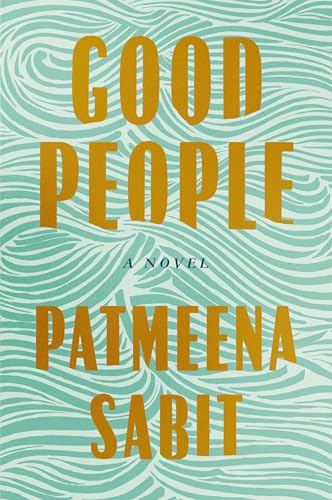 This book is a buzzy, page-turner of a book, and one that will surely provide us with plenty of “grist” for an interesting discussion today/later tonight. Good People is author Patmeena Sabit’s debut novel about the Sharaf family, Afghan refugees who build a successful life in the US, only to find their image shattered after a family tragedy. The story is told entirely through the perspectives and voices of family outsiders — but never through the family members themselves.
Here are my questions for today’s discussion:
- What did you think about the author’s decision to write the novel through multiple points of view? Did this have an impact on your reading experience and understanding of the novel’s central mystery?
- The main drivers of the action in this novel came from rumor, gossip, and wild speculation. Did this ring true for you? Can you imagine what would happen in your own community if something like this situation were to unfold? Did you find some of the narrators more trustworthy than others?
I can’t wait to hear what you think!
=========
Don’t forget: We’ll be discussing the book on Zoom tonight — June 9 — at 7:00 pm Eastern Time. I sent out the Zoom invitation/link yesterday evening, but it’s not too late to RSVP. Just let me know in the comments or send me an email (you can use the link in the sidebar) if you’d like to join our Zoom discussion.



I think the fact that Sabit chose to write the novel through multiple points of view, often composed of rumor, gossip, and wild speculation, was the main reason I enjoyed the book so much. Each person expressing an opinion had their own thoughts and expectations, and it was quite difficult to know what the “truth” really was (just like in real life). That seems quite true in my community, sad to say. All of it is based on the characters’ visible actions with very little knowledge of their real motivations. I’m looking forward to hearing everyone’s thoughts at our discussion tonight!
Oh boy. Well, I listened to this book… and did not read it with my eyes. My opportunity to read it arrived early last week but I decided that I did not care to revisit this story and that perhaps my listening experience might be exactly what the author was trying to achieve. It very much felt like a “true crime podcast” to me as I was listening. I listened avidly to Serial, Season One: The Adnan Syad Case and this felt very much like that to me. Truly a curious way to write a book!
As for the something similar (gossip) happening where I live… well, hello! I live in Pittsburgh where the word Nebby is A Thing. Everyone “knows” everyone else’s business and it drives me insane. I do not like gossip… it makes me crazy. So I try very hard to stay out of that gossip loop. Some of this novel did feel “Nebby” to me… that “looking in and believing you know what’s going on” but in actuality you really don’t know at all.
I think tonights discussion should be fantastic!
Reading all of the various points of view really drove home the damage caused by gossip, whether by word of mouth or on social media. We never really heard the Sharaf family’s point of view, it was like they were tried by gossip. I enjoyed this format.
I thought the testimony and gossip way of telling the story really added to the true crime vibe, as Kat suggested in comparing it to Serial. But I’d like to push back a LITTLE on the gossip piece. There certainly IS gossip here, and some of it is malicious. But you could also imagine this book a court transcript of sorts — all the witnesses, except the people who might know the truth. But even if they spoke, would we believe them? SPOILER Alert –
If Zorah came back from the dead, we’d MOSTLY believe her. But would we believe her brother, mother, or father? Maybe only if they confessed that it WAS an honor killing. As it is, I think it was an accident, but I don’t know for sure.
Also the testimonies illustrate something else as we readers try to figure out what really happened — we have to judge if these witnesses and sources are telling (or know) the truth, and we have to judge if they understand the situation correctly. We figure out that some of their “friends” have an ax to grind and are jealous. We see outsiders who assume this is a family who are somehow “radically” Muslim.
It’s also interesting to appreciate that even among the Afghan community, the family started as outsiders. They found help, but they also met with a lack of sympathy from others who felt they’d paid their dues and that Rahmat, especially, would have to pay his.
We also make judgements about whether refugees and immigrants are good for our country or not. And we often do it from the viewpoints illustrated in this book. I thought it was really powerful.
I’m really sorry plans here (I’m visiting my daughter in Montgomery) won’t allow me to attend tonight – I wish, just for once, this was recorded. I’ll admit I got mixed up and overlooked that 7 in Michigan is 6 here, a complicated time to step out of the family visit. But I know you’ll have a great conversation.
I really liked the way it was written. It kept my interest. I’m sure in the town I live in there would be lots of opinions and that is just me going on the town Facebook pages which can get crazy.
Again my comment hasn’t showed up yet so I will try again. I’m sure where I live their would be many opinions going by the town Facebook groups that are just crazy.