



Welcome to . . . Read With Us Discussion Day v.2
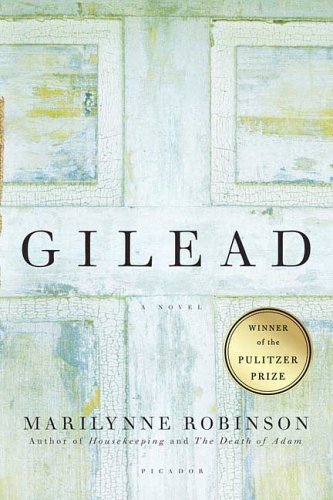
Okay, just a bit of an update before I get started today: Bonny and Carole posted discussion questions for our latest RWU book . . . Gilead by Marilynne Robinson . . . LAST WEEK (as originally scheduled). Because I was sick, I didn’t post my questions. Feel free to comment here – or save your thoughts for our discussion tonight. Bonny has re-posted her questions today; Carole has not — but you can use the link (above) to remind yourself of her questions if you’d like.
 Now, on with my delayed post . . .
We chose Gilead as our Read With Us “Contemporary Classic” for the year — a book that’s been out in the world for some time already . . . but maybe we/you missed it back when it was “buzzy,” or maybe we/you read it back then and can’t really remember it much anymore.
Last month (in my “promo post” for the book), I explained that I’ve actually already read Gilead twice before. The first time (2005) I thought it was . . . okay. But the second time (2018) . . . I loved it. This time around, I read it again (third time’s the charm?) . . . and found it to be . . . much sloggier than I remembered.
At first, I thought I was crazy. How could I have read the same book THREE times (granted . . . spread out over over the course of 3 separate decades) and have such different responses? After much consideration, I’m sure . . . it was the same book all along. But I was a different reader at each reading! (I think this is a fascinating topic, so maybe we’ll end up talking about it tonight during the Zoom?)
Anyway. I think Gilead is an . . . interesting book. It’s a bit slow. There’s not a lot of action. And no dialog or conversation going on at all. So what do we even TALK about . . . if it’s our book group pick? Well. I’m sure we’ll have much to say!
And I’ve got a couple of questions for us to chew on for a while:
- What do you think about the literary devices Marilynne Robinson employed in this novel — the epistolary format, the lack of conventional chapter breaks, and John’s strong, “reverend-y” voice? If you didn’t enjoy the book, do you think those things got in your way of enjoying the story? What literary approach (if any) might you have liked better for this particular story?
- My next question jumps the track entirely here . . . to focus on Jack. For most of the novel, John seems to struggle with his distrust of Jack. Do you believe John is writing honestly about the nature of his distrust? How did that . . . tension . . . make you feel as you were reading? And how do you think John felt about Jack’s “news” about his family back in Tennessee? Do you think John would have been accepting of Jack’s family moving to/living in Gilead?
I can’t wait to hear what you think.
=========
Don’t forget: We’ll be discussing the book on Zoom tonight – March 24 (our RESCHEDULED discussion day) at 7:00 pm Eastern Time. If you had planned to join us last week, you should have received a revised Zoom link for tonight. And if you couldn’t join us last week, but can join us this week, let me know and I’ll send you the link.
Sorry for all the confusion. Life . . . happens.
I’m looking forward to seeing you tonight.




I think the long epistolary format and John’s very “reverendy” voice had a lot to do with my thinking that the book was a slog. So much of the “action” (or lack of it) takes place internally and I think it’s hard to propel a story forward with very little plot. John’s voice came off as “holier than thou” to me, so that contributed to my feelings about the book.
I’m glad you asked about Jack because I wondered why John spent so much of the book talking about him. Yes, Jack was his godson and he lied, stole, and abandoned the woman who was pregnant with his child. It seemed normal to me to distrust Jack as he had not shown himself to be a trustworthy person. Maybe that’s not how a reverend is “supposed” to feel, but I think it’s madness to trust everyone, especially when they show you who they are (repeatedly). I think John did forgive Jack, but I’m not too sure that he would have actually welcomed him moving back to Gilead. I hope that someone might have read the other books in the series to shed more light on Jack.
I am so glad you are better! I have not been participating in your book club, but I do have a comment about being a different reader when re-reading a book. I find many of the books I remember so fondly to be a slog these days. I think this quote describes it perfectly. “A man cannot step into the same river twice, because it is not the same river, and he is not same man.” -Heraclitus. I actually came to understand this quote much better in my old age. The books are obviously the same, but their relevance changes.
I found the epistolary format to be very rambling and I think that contributed to my overall impression of it feeling like a slog. And I think John’s reverend-y-ness makes him harder to connect with. I do think the Jack storyline is entertaining but we waited a long time for the pay off and full story there. I think I read that one of the books in this series is about Jack? I am curious about that but I don’t know if I’m curious enough to actually read it.
I did not like John at all… he came off as so sanctimonious to me. And I think one long letter from one man without any reply from the recipient also made it drag. As for Jack, I tried to not do what John did… be judgmental. We don’t know Jack’s story… only John’s opinions of Jack. I would think that John would know best the ‘judge not lest you be judged’ passage… but since he was so judgy… my thoughts about him are equally judgy.
I found it very annoying at first, I missed my chapter breaks. I finally just accepted it and went with it.
I am breaking my silence about book clubs here to say that if I WERE a book club person yours are the kind of provocative questions that would make me want to jump right in and participate in the discussion. Only trouble is I would have to read the book. Which would, for some reason, annoy me a lot. From an early age, despite being a huge reader, I hated hearing people go into detail about a book. (On the other hand I will happily pick a movie to pieces, go figure.) Anyway, Kym, just wanted you know that I really appreciate your questions/discussions anyway and everyone is lucky to have you!
.