



Welcome to . . . Read With Us Discussion Day
Bonny and Carole and I are posting discussion questions today for our latest RWU book . . . The Antidote by Karen Russell. Join the discussion by commenting on our blogs.
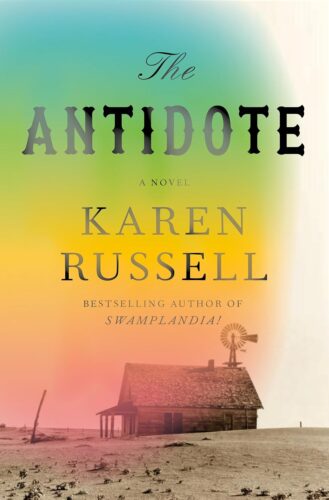 This novel . . . is definitely a chewy one. It’s a great book for book clubs because there is a veritable cornucopia of topics to think about and discuss! If you read the book with us, I hope you’ll jump into one of our blog discussions today or join us for the Zoom discussion tonight. I think talking about this book with other readers may help us all find our footing with this deeply layered and challenging novel.
One major theme/topic in The Antidote is . . . land loss. The book opens with Black Sunday, one of the most extreme Dust Bowl storms/”events” in American history. But that’s just the beginning of the land loss story in The Antidote. I’m really intrigued with the connection between Dust Bowl erosion and the stealing of Indian land. Toward the end of the book, the character Harp Oletsky gives the following speech at a town gathering . . .
“I guess, the way I see it, you could tell the story of the Dust Bowl another way. You could widen the lens and say: this land is blowing because we stole it from the people who know how to care for it. Before we uprooted the prairie, we uprooted human beings. With our cooperation, the United States waged a war against the Indians, who were farming these lands long before our arrival, and – I think we can all admit – with much better results. Our war created the conditions for the dust clouds that swallow the sun. Now we’re the ones forced to leave our homes – tractored off, dusted out, foreclosed on. It was a great collapse of memory that paved the way for our collapse.”
My questions for you . . .
- As you read The Antidote, did the topic of soil loss strike you as a main theme that connected other themes? Did it seem more literal (the dust storms and stealing of land) or metaphorical (cultural or personal erosion of memory and history)?
- What does the novel suggest about responsibility for environmental decline?
I’d also love to spend some time talking about the Scarecrow character, but I don’t have a specific question for you. Feel free to throw out your thoughts, though!
I can’t wait to hear what you think. (Be sure to visit Bonny and Carole today for additional questions about The Antidote.)
=========
Don’t forget: We’ll be discussing the book on Zoom tonight – 7:00 pm Eastern Time. There’s still time for you to join us. Just let me know of your interest either with a comment or by sending me an email (see sidebar, above) — and I’ll send you a Zoom invitation.
PS – If you are planning to join us on the Zoom, but haven’t received an invitation from me (I sent them Monday afternoon), please let me know so I can get the Zoom link to you today.


Sadly, I don’t remember much about this book at all, but I do remember this speech. (although, I could not have told you the name of the character who said it, so thanks for reminding me) In my vague recollections of this story, to me it seemed the raping of the land was a major character in the story. (and story aside, I think we are absolutely responsible for the condition of the planet) The scarecrow… I am interested in hearing your thoughts and ideas around him… I have nothing to contribute to the book conversation, but I am so eager to see everyone tonight. I have been looking forward to it for some time now!
Wishing I hadn’t finished the book quite some time ago! I do remember that speech though – very impactful. So much of this book is about loss – loss of memories, loss of land, etc. And, yes, agreeing with Kat, we are definitely responsible for the condition of our planet.
I like Vera’s idea of much of the book being about loss – loss of land from Native Americans, loss of land from poor farming practices, loss of memories, loss of children and all the consequences of all that loss. The losses were physical and metaphorical. We really never seem to learn from our own mistakes or mistakes made in the past. And yes, please, let’s talk about the scarecrow! He was one of the most confusing aspects of the book to me.
I agree, this book is about so much loss and the choices we make that contribute to loss or can work to restore. I’m currently reading The Wayfinder and the themes of the two books are very similar.
I think the soil loss was definitely a connecting theme, but I was more fascinated in the hidden complicity in taking the land from Native Americans. I thought that was well told — how vulnerable the settlers were, and the ways they resolved their moral qualms, or didn’t, at the cost to the Indians.
I was really struck by this theme of land/soil loss in the book and think it speaks a lot to the current state of climate change. Indigenous people have always been much better stewards of the land — because they respect it and honor it, rather than just taking it. The idea of vaults, to me, represented our general unwillingness to take responsibilities for our actions, whether that’s to do with destroying the land or destroying cultures.
I think the theme of the soil loss was important and the land was a major part of the story. The scarecrow was confusing for me and I meant to do a web search after to see if anything kept up about it but I ran out of time.